DRYWALL REPAIR COST
Published October 2026
$200–$550
TYPICAL REPAIR
Fixr's cost guide (updated January 31, 2025); national average $350.
$60–$80
PER SQ FT OF PATCH
Fixr's per-square-foot rate for the damaged area, not for the whole wall.
1 hour
USUAL MINIMUM
Fixr: most pros bill $70–$80 an hour with a one-hour minimum on small jobs.
DRYWALL REPAIR QUOTE BUILDER
Pre-filled with a typical move-out patch list. Minutes, visits and rate are samples: put in your own.
Nail pop
$75–$140 each, priced alone
3Anchor or screw hole
$75–$105 each, priced alone
2Small hole
$60–$200 each, priced alone
1Crack
$60–$330 each, priced alone
0Loose or bubbled tape
$80–$190 each, priced alone
0Corner crack
$220–$315 each, priced alone
0Ceiling hole
$75–$115 each, priced alone
0
1 with setting compound, 2–3 with ready-mixed.
YOUR PRICE, ONE TRIP PLAN
$195
2.3 hrs for 6 repairs
SAME REPAIRS PRICED ONE BY ONE
$435–$830
Sum of Fixr's per-repair ranges (updated January 2025). Each range carries its own minimum, so a batched visit should land lower.
Drywall repair cost by type of damage
A drywall repair is priced by what failed, not by the size of the room. A nail pop and a doorknob hole take the same trip, the same setup and the same drop cloth; what changes is how many coats of compound the repair needs and whether anything has to be cut out. Fixr's cost guide breaks the common repairs down like this, labor included:
| Repair | Typical cost | What the work is |
|---|---|---|
| Nail pop | $75 – $140 | Reset or add a screw, fill, two or three thin coats |
| Anchor or screw hole | $75 – $105 | Pull the anchor, fill, feather |
| Small hole | $60 – $200 | Mesh or backed patch, then coats |
| Crack | $60 – $330 | Open the crack, tape it, coats |
| Loose or bubbled tape | $80 – $190 | Cut out the failed tape, re-tape, coats |
| Corner crack | $220 – $315 | Re-tape the inside corner or replace bead |
| Torn paper face | $95 – $300 | Seal the torn paper before any mud |
| Water damage or flood cut | $400 – $800 | Cut out wet board, new board, tape, finish |
Source: Fixr, “Drywall Repair Cost”, updated January 31, 2025 (read October 2026). Costs are regional; use these as a check against your own hours, not as a price list.
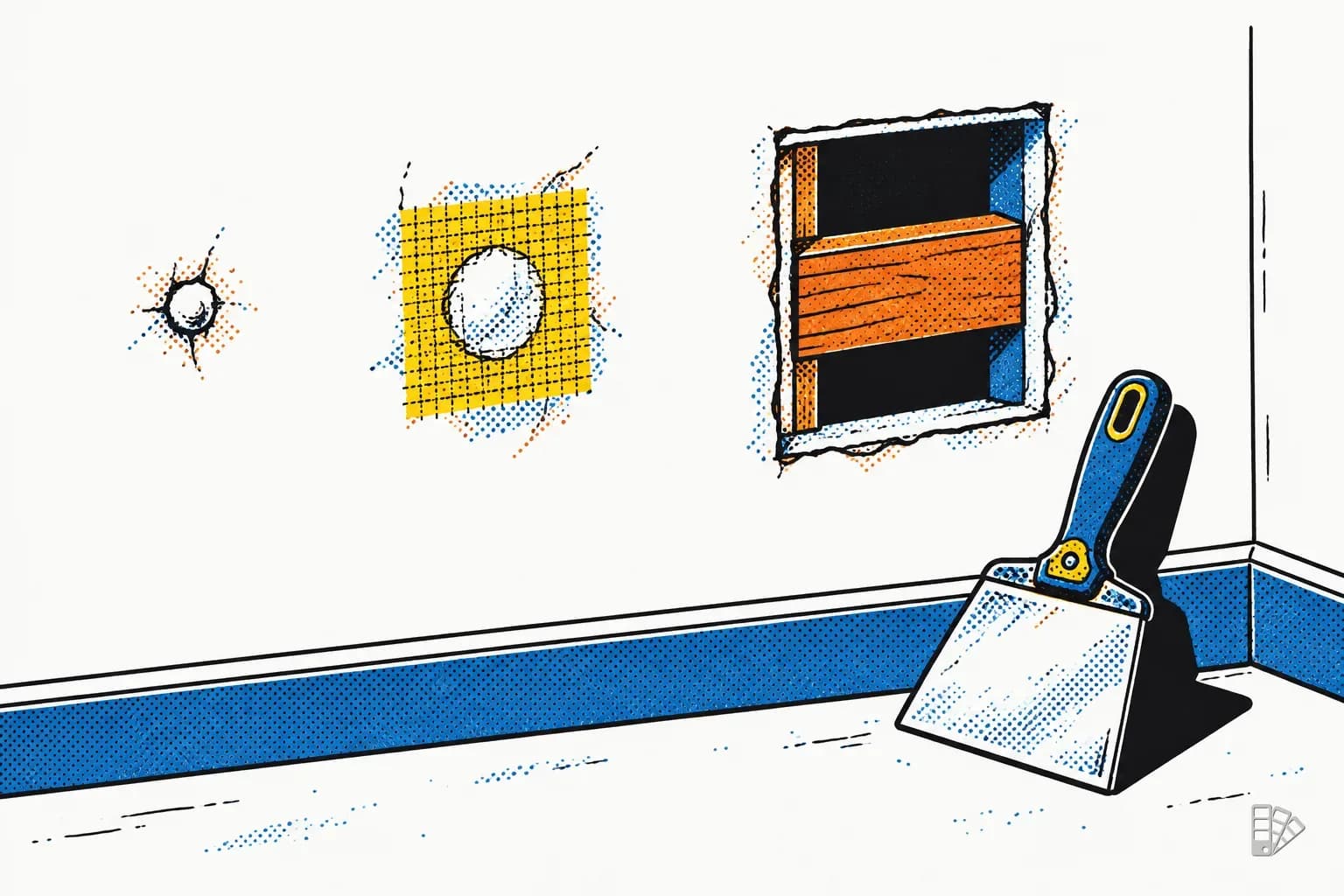
Drywall repair costs per square foot
Fixr puts larger patches at $60–$80 per square foot of damaged area, and Inch Calculator's guide (last updated October 2023) gives $50–$80. That looks steep next to hanging new board, and it is meant to: the square footage is small, but the visits, the setup and the blending into the old wall are the same as on a big job.
| Patch size | Typical cost | Per sq ft |
|---|---|---|
| 2 sq ft | $120 – $160 | $60 – $80 |
| 5 sq ft | $300 – $400 | $60 – $80 |
| 10 sq ft | $600 – $800 | $60 – $80 |
| 20 sq ft | $1,200 – $1,600 | $60 – $80 |
Two things make the per-foot number misleading. On a small patch, the minimum charge sets the price, not the area. On a large area, cutting out the wall and hanging a new piece is usually cheaper per foot than patching, which is the drywall replacement cost question below. Average drywall repair cost lands in between: Fixr gives $350 on a range of $200 to $550; Inch Calculator gives $500 on $100 to $1,000.
Drywall ceiling repair cost
Fixr puts a small ceiling hole at $75–$115 and a repair on a vaulted ceiling at $400–$1,000. The gap is the staging: a flat 8-foot ceiling is a step ladder, a vault is planks or scaffold, plus more drop cloth and more masking under the work.
- Ceiling drywall repair cost per square foot usually runs above the wall rate for the same patch, because you work overhead, every coat sags if it goes on thick, and the light from the windows rakes across the ceiling and shows every ridge.
- Texture decides the price. A smooth ceiling is skimmed and sanded. A popcorn ceiling has to be matched with a spray texture, and in an older home tested first (see the popcorn ceiling removal cost guide for when removal beats patching).
- Stains are a separate line. A water stain around a repair bleeds through latex unless it gets a stain-blocking primer; see the types of primer.
Drywall replacement cost: patch or new board
Inch Calculator's guide puts new drywall installation at $1.50–$3.50 per square foot, against $50–$80 per square foot for a patch. The per-foot gap closes the deal on anything large: once the damage runs most of a sheet, cut the wall back to the studs and hang a new piece instead of building up a patch.
| Damage | Usually | Why |
|---|---|---|
| Hole up to a few inches | Patch | Mesh or a backed patch, no cutting |
| Hole bigger than your hand | Patch with backing | Cut square, add wood backing or a California patch |
| Wet, soft or swollen board | Replace | Soft board will not hold a patch; the leak gets fixed first |
| Board that stayed wet and stained | Replace | Cut back to dry, sound board; check the cavity |
| Most of a sheet, or several holes in one bay | Replace | New board is cheaper per foot than patching |
Drywall replacement cost on a wall is the board, the hang, the tape and three coats, then the paint. Drywall ceiling replacement cost adds lifting the sheet overhead (a panel lift or two people) and the same finishing on your back. Fixr lists a flood cut, the strip cut along the bottom of a wall after a leak, at $400–$800.
Why the number of visits sets the price
On a drywall repair estimate, the line that moves the price most is not the patch, it is the trips. Ready-mixed compound dries by evaporation, so each coat waits for the last one to dry, often overnight. A three-coat repair on ready-mixed can mean three visits for twenty minutes of work each.
Setting-type compound cures by chemical set, so the next coat can go on the same day. USG's product pages give the windows:
| Compound | Working time | Setting time | Use it for |
|---|---|---|---|
| Sheetrock Easy Sand 20 | 20 min | 25–35 min | Small patches, same-visit coats |
| Sheetrock Easy Sand 45 | 45 min | 50–65 min | Heavy fills, a room of patches |
Source: USG product pages for Sheetrock Brand Easy Sand 20 and Easy Sand 45, read October 2026.
The trade-off is sanding: most setting compounds sand harder than ready-mixed (USG markets Easy Sand as sanding like an all-purpose ready-mixed), so many finishers fill with setting compound and top with a ready-mixed coat. That plan turns a three-visit job into one or two, which is how you price small repairs at a number the homeowner accepts and still clear your labor cost.
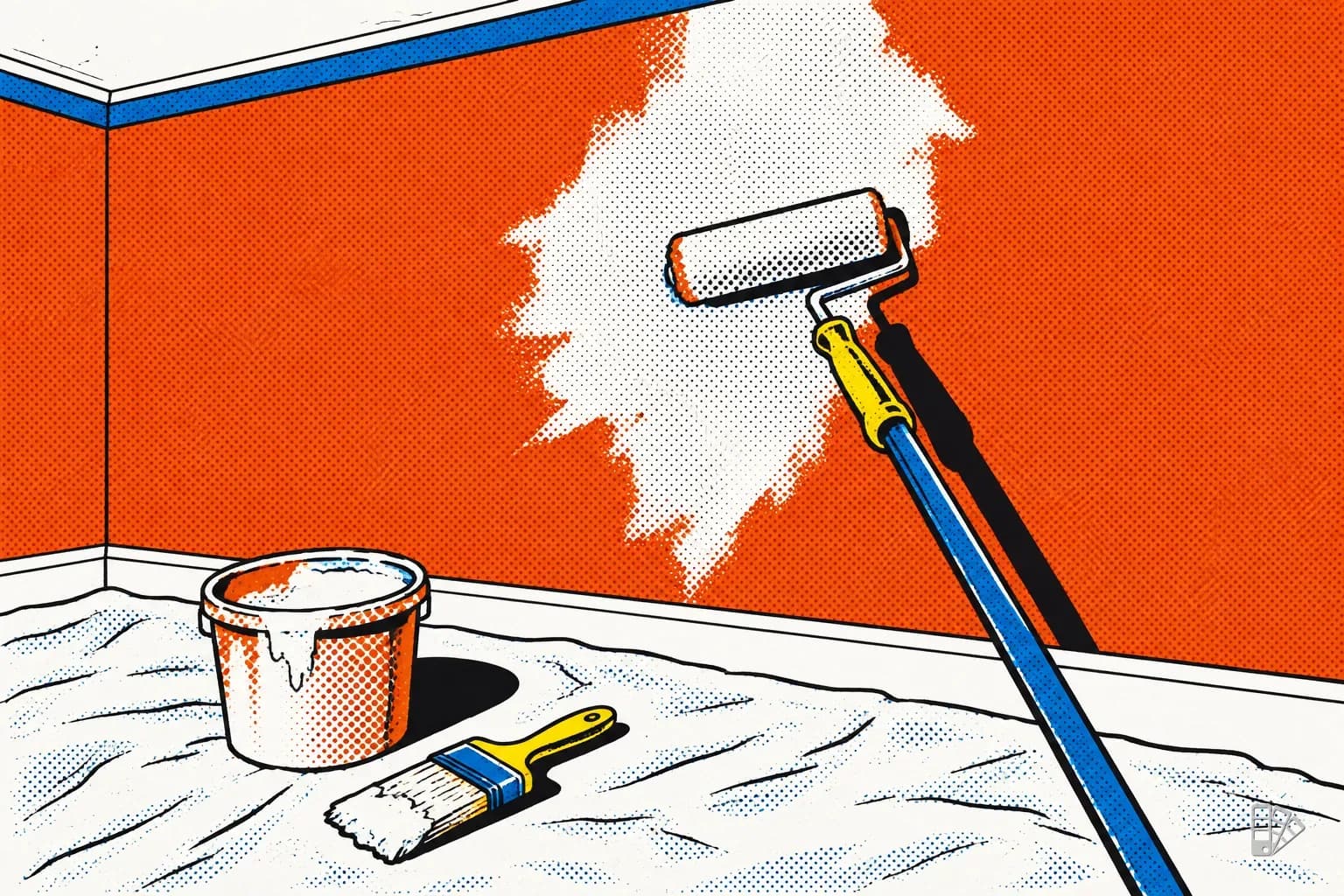
The repaint most drywall repair quotes leave out
A finished patch is not a finished wall. Joint compound soaks up paint differently from the painted surface around it, so a patch painted straight over shows as a dull or shiny spot, the flashing every painter has been called back for. Spot-prime the patch first (the primer guide covers which one), then decide how much wall gets the finish coat.
- Flat or matte walls forgive a careful touch-up on the patch alone.
- Eggshell, satin and semi-gloss show touch-ups at an angle, so the safe quote is the whole wall, corner to corner (the paint sheen guide explains why).
- Fixr's guide calls painting the repaired area standard practice and puts a single room at $990–$1,320. Price it from your own cost to paint a room numbers instead.
How smooth the repair has to be depends on the paint going over it. National Gypsum, summarising the Gypsum Association's GA-214 levels of finish, recommends Level 4 under flat paints and light textures, and Level 5, a skim coat over the whole surface, under non-flat or dark, deep-tone paints and where critical lighting rakes across the wall. A patch on a semi-gloss hallway lit by a window at the end may need a skim beyond the patch itself.
Pre-1978 homes: lead and asbestos before you cut
EPA's Renovation, Repair and Painting rule requires anyone paid to disturb painted surfaces in homes, child care facilities and preschools built before 1978 to be certified, sole proprietors included. Small repairs can fall under its minor repair and maintenance exception, and the definition in 40 CFR 745.83 sets the limits:
| Rule | What it says |
|---|---|
| Interior | 6 square feet or less of painted surface disrupted per room |
| Exterior | 20 square feet or less of painted surface |
| Removing a painted piece | The entire surface area removed counts as disturbed |
| Same room, 30 days | Jobs in the same room within 30 days count as one job |
| Never minor | Prohibited work practices, window replacement, demolition of painted surface areas |
The trap for a drywall repair: cutting out a 2 × 4 ft section of painted wall removes 8 sq ft, over the 6 sq ft line, and the definition also leaves demolition of painted surface areas out of the exception. On a pre-1978 house, check the lead paint certification rules before you price the cut-out, not after.
Writing a drywall repair estimate as a painter
BLS puts the median pay for drywall and ceiling tile installers and tapers at $28.74 an hour (May 2025), and Fixr reports most contractors billing $70–$80. The gap is burden, drive time, the van, insurance and profit; run your own numbers through the overhead calculator and the markup calculator rather than borrowing anyone's rate. A drywall repair quote that holds up lists:
- Each repair by type and count (photos attached), not “misc. drywall”.
- The plan: compound type, number of visits, and the texture to match.
- Primer on every patch, and the repaint scope: patch, wall or room.
- Access: ceiling height, stairwell, furniture moved by whom.
- For pre-1978 homes, how lead-safe work and testing are handled.
- What is excluded: the leak, the framing, anything found behind the board.
Add it as its own section on the painting proposal when the repair rides along with a repaint, so the homeowner sees the drywall repair price next to the paint price instead of buried in it.
Drywall repair price cheat sheet
- Typical repair
- $200–$550, average $350 (Fixr, 2025)
- Small hole
- $60–$200 (Fixr)
- Larger patch
- $60–$80 per sq ft of damage (Fixr)
- Ceiling hole / vaulted ceiling
- $75–$115 / $400–$1,000 (Fixr)
- New board, installed
- $1.50–$3.50 per sq ft (Inch Calculator)
- Billed rate
- $70–$80/hr, 1-hour minimum (Fixr)
- Same-visit coats
- Setting compound: Easy Sand 20 sets in 25–35 min
- Pre-1978 home
- Over 6 sq ft painted surface per room, or demolition: RRP applies
Cost figures are national guides read in October 2026 and vary by region. Price from your own hours and material.