Temperature Ranges by Paint Type
Every paint can lists a minimum application temperature, but the real rule is stricter: both the air and the surface must stay above the minimum for at least 4-6 hours after application. A 50°F afternoon means nothing if it drops to 35°F by sunset.
EXTERIOR PAINTING TEMPERATURE RANGE
For interior projects, room temperature is usually fine — keep the HVAC running and maintain 50-85°F. Problems arise when painting unheated rooms, garages, or new construction without climate control.
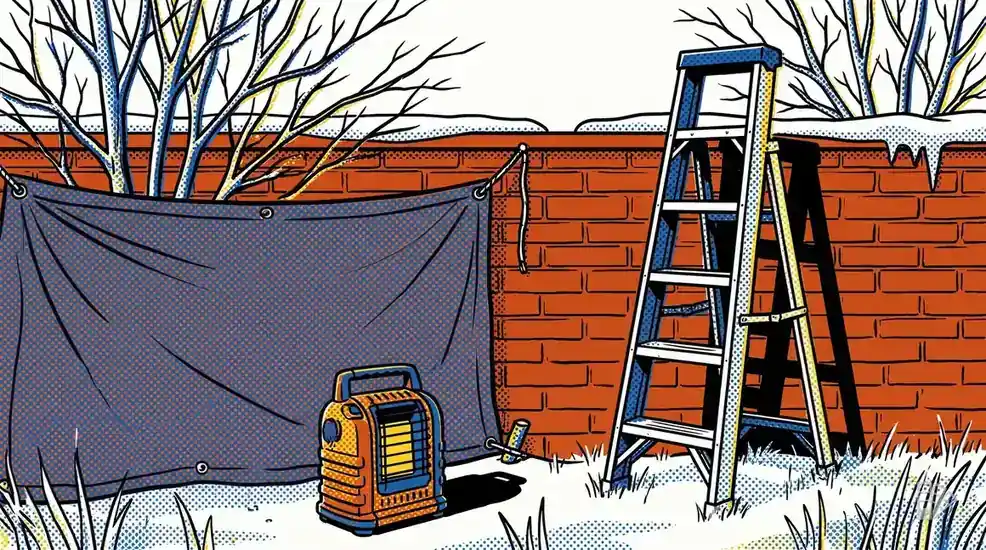
Painting in Cold Weather (Below 50°F)
What Goes Wrong
Film won't coalesce
Below 50°F, latex paint particles can't fuse into a continuous film. The result is a chalky, powdery surface that wipes off.
Cracking within weeks
Paint that dries but doesn't cure properly develops micro-cracks as temperature fluctuates. Moisture gets behind the film and peeling starts.
Frost ruining wet paint
Overnight temperatures can drop well below the daytime high. Paint needs 4-6 hours above minimum temp to set — dew and frost kill fresh coats.
Extended dry times
Paint that normally dries in 1-2 hours can take 6-8+ hours in cold weather, attracting dust, insects, and debris into the finish.
“PAINT THAT DRIES IN COLD WEATHER LOOKS FINE FOR 30 DAYS, THEN PEELS IN SHEETS.”
Common contractor experience with sub-50°F applications
6 Cold Weather Tips
Check both air AND surface temperature. Shaded north-facing walls can be 10-15°F colder than the air. Use an infrared thermometer on the surface.
Paint between 10 AM and 2 PM when temperatures peak. Stop early enough for paint to set 4-6 hours before nighttime lows drop below minimum.
Store paint indoors at 60-80°F. Bring cans outside only when ready to use. Cold paint is thick and won't level properly — never leave cans in an unheated garage overnight.
Use a cold-rated latex paint (rated to 35°F) with added coalescing agents. Benjamin Moore's low-temp formula and Sherwin-Williams Duration are popular choices.
Extend recoat times by 50-100%. If the label says 2 hours between coats at 77°F, wait 3-4 hours when it's 45°F. Rushing the second coat traps solvent.
Skip the sprayer in cold weather — brushing and rolling give better adhesion on cold surfaces. Sprayed paint atomizes thinner and cools even faster mid-air.
DEW POINT RULE
The surface temperature must be at least 5°F above the dew point. If the dew point is 42°F, your wall must be 47°F or higher. Painting at or near the dew point causes condensation on the wet film — instant adhesion failure.
Painting in Hot Weather (Above 85°F)
Hot weather painting is arguably worse than cold weather painting because you can’t see the damage until weeks later. Cold paint failures are obvious immediately; hot weather failures look fine at first, then blister and peel once the paint goes through a temperature cycle.
90°F+
Surface temperature where paint starts to flash dry — stop painting and wait for shade or cooler conditions
What Goes Wrong in Heat
Flash drying
Above 90°F, paint dries before it can level. Brush marks and roller stipple become permanent. Lap marks appear where wet edge is lost.
Bubbling & blistering
Trapped solvent can't escape through a skin that's already set. Gas expands under the surface, creating blisters that pop and peel.
Poor adhesion
Paint bonds to the surface as it cures, not as it dries. Flash-dried paint sits on the surface without penetrating — it chips off easily.
5 Hot Weather Tips
Chase the shade. Start on the north or east side in the morning, move to the west in late afternoon. Never paint surfaces in direct sunlight.
Use the "palm test" — if you can't hold your palm on the surface for 5 seconds, it's too hot to paint. Surface temp matters more than air temp.
Mist the surface with water before priming (not painting). A slightly damp surface cools the substrate and slows dry time by 10-15 minutes.
Add a paint conditioner (Floetrol for latex, Penetrol for oil) to extend open time by 20-40%. This gives the paint more time to level and bond.
Work in smaller sections — 3-4 foot wide instead of full wall width. Maintain a wet edge by overlapping into still-wet paint before it skins over.
Using a paint sprayer in hot weather amplifies flash-dry problems because atomized paint loses heat (and moisture) faster. If you must spray above 80°F, increase the fluid tip size and reduce pressure to lay thicker coats.
INTERIOR PAINTING IN SUMMER
Run the AC and keep the room at 65-75°F while painting and for 24 hours after. Attics, sunrooms, and west-facing rooms can reach 95°F+ without climate control. Calculate your room painting cost before starting a summer interior project — running the AC during cure time adds to the budget.
Best Time to Paint Exterior & Interior
The best time to paint a house exterior is early fall — September and October in most of the U.S. Temperatures sit in the sweet spot (60-75°F), humidity drops, and there are fewer rain days. Spring is the runner-up, but pollen and spring showers can cause problems. Here’s how each season stacks up.
Mild temps, low humidity. Wait until nighttime lows stay above 50°F consistently.
Paint early morning or late afternoon. Avoid direct sun. Best for interior (AC controlled).
Ideal temps, dropping humidity, fewer bugs. The #1 season for exterior painting.
Exterior is risky except in warm climates. Interior is fine with heating above 50°F.
Planning a large exterior project? Get an accurate estimate template ready before prime painting season so you can book crews early — fall schedules fill fast.
Dew Point & Humidity Rules
Temperature is only half the equation. Humidity and dew point determine whether paint can release water vapor fast enough to cure. Most painters check temperature but ignore humidity — that’s why callbacks happen.
HUMIDITY & DEW POINT GUIDELINES
High humidity slows evaporation, so paint stays wet longer and is more likely to sag, run, or pick up airborne debris. In the Southeast and Gulf Coast, morning humidity can exceed 90% even on sunny days — wait until after 10 AM when it drops. For masonry surfaces like brick and stone, humidity is even more critical because porous substrates already hold moisture.
ACTIONABLE TAKEAWAY
Check three numbers before painting: air temperature, surface temperature, and dew point. Free weather apps like Weather Underground show dew point by the hour. If any one number is outside spec, wait. One lost day beats a full repaint.
Quick Reference Cheat Sheet
PAINTING WEATHER CHEAT SHEET
GO / NO-GO CHECKLIST
KEY NUMBERS
BEST PAINTING SEASON BY REGION
Northeast / Midwest
Sep - Oct, Apr - May
Southeast / Gulf
Oct - Nov, Mar - Apr
Southwest / Desert
Oct - Apr (avoid summer)
Pacific Northwest
Jul - Sep (dry window)
QUICK FIX BY CONDITION
Too cold (35-50°F)
Use cold-rated latex + extend dry time 50%
Too hot (85-95°F)
Add Floetrol + chase shade + small sections
High humidity (70-85%)
Wait until after 10 AM + check dew point
Rain expected
Stop painting 4-6 hours before rain
Calculate materials before your weather window with the paint calculator, or build a client-ready painting proposal that includes weather contingency language.
RELATED TOOLS & GUIDES
Paint Calculator
Figure out exactly how many gallons you need before the weather window closes.
GUIDEHow to Paint a Room
Full interior painting walkthrough — prep, cut-in, roll, and finish.
GUIDECost to Paint a House
Budget for exterior painting by square footage and surface type.
GUIDEHow to Use a Paint Sprayer
Sprayer technique matters even more in temperature extremes.
COMPARISONBenjamin Moore vs Sherwin Williams
Compare cold-weather paint formulas from the two biggest brands.