HOW TO PAINT OVER WALLPAPER
March 9, 2026 · 9 min read
Paint Over vs. Remove: The Real Numbers
Paint over wallpaper
Primer + paint, per room
Remove then paint
Removal + repair + paint
DIY paint-over time
One room, two coats
DIY removal time
Stripping + drywall repair
Of wallpaper can be painted
If adhered well & smooth
Must be removed first
Vinyl, peeling, or damaged
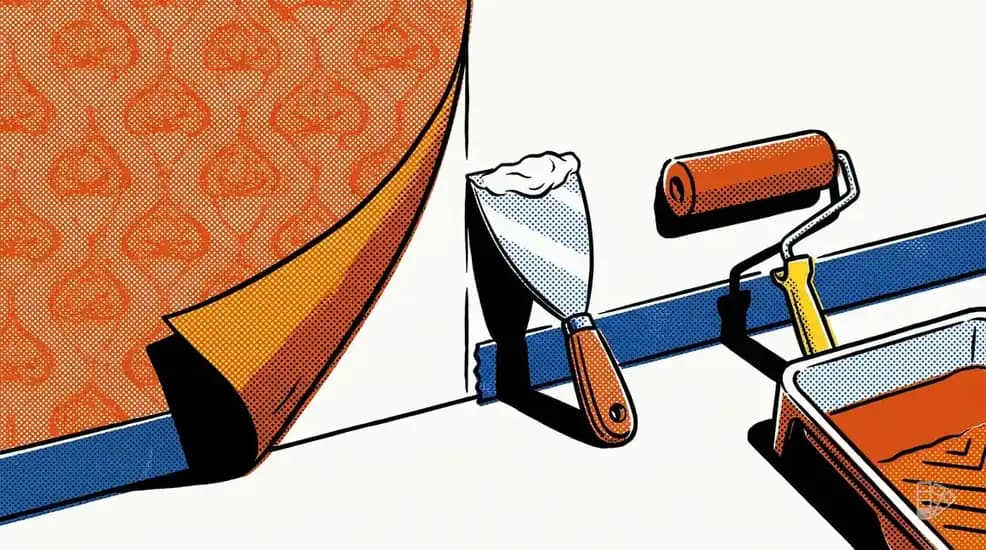
Stripping wallpaper is messy, slow, and often damages the drywall underneath. Painting over it is faster and cheaper — but only when the wallpaper is in the right condition. Done wrong, you end up with bubbling paint and peeling seams that look worse than what you started with. This guide covers exactly when painting over wallpaper works, the right primer and paint to use, and how to avoid every common mistake.
When You Can Paint Over Wallpaper
Not all wallpaper can be painted over. The wallpaper type, condition, and how many layers are on the wall all determine whether painting is a viable shortcut or a future headache. Run through both lists before you buy any supplies.
PAINT OVER IT
- Wallpaper is firmly adhered with no peeling edges
- Only one layer of wallpaper on the wall
- Paper-based (non-vinyl) wallpaper
- Seams are flat and not lifting
- No mold or water damage underneath
- Wall surface is smooth without heavy texture
REMOVE IT FIRST
- Vinyl or vinyl-coated wallpaper (paint won't adhere)
- Multiple layers stacked on top of each other
- Peeling, bubbling, or lifting at seams
- Water damage or mold visible behind paper
- Heavy texture or embossed patterns you want smooth
- Wallpaper applied directly to drywall paper (no primer underneath)
Quick test: Dampen a small corner with a wet sponge. If the wallpaper starts bubbling or lifting within 30 seconds, the adhesive is failing and you should remove it. If it stays flat and firm, it's a good candidate for paint.
Supplies You Need
Budget $50-100 in materials for a single room. The primer is the most important purchase — do not substitute with latex primer or the wallpaper adhesive will reactivate and bubble under your paint.
SUPPLY CHECKLIST
Oil-based or shellac primer
NOT latex — it activates wallpaper glue
Interior latex paint (2 coats)
Eggshell or satin sheen recommended
Wallpaper seam adhesive
For re-gluing lifted edges before priming
Spackle / joint compound
For filling torn spots or seam gaps
Putty knife (3-inch)
For applying spackle smoothly
120-grit sandpaper
For smoothing spackled areas
TSP cleaner or degreaser
For washing walls before priming
Roller (3/8" nap) + brush
Short nap minimizes texture over wallpaper
Painter's tape(optional)
For trim, ceiling lines, and outlets
Drop cloths(optional)
Canvas preferred over plastic (less slippery)
1Clean the Walls
Wallpaper collects years of dust, cooking grease, and nicotine that you can't always see. If you prime over a dirty surface, the primer can't bond and the entire paint job fails within months.
Cleaning method
- 1.Mix 2 tablespoons of TSP (trisodium phosphate) per gallon of warm water. Alternatively, use a degreasing cleaner.
- 2.Wipe walls top to bottom with a damp (not soaking) sponge. Excess water can loosen the adhesive.
- 3.Rinse with a clean damp cloth to remove TSP residue.
- 4.Let walls dry completely — at least 24 hours. Use a fan or dehumidifier to speed this up.
Warning: Do not use a steam cleaner or soak the walls. Water reactivates wallpaper adhesive. A damp wipe is enough.
2Repair Seams & Damage
This step determines whether your paint job lasts years or peels within weeks. Every loose edge, torn spot, and bubble needs to be fixed before primer goes on. Primer locks everything in place — including defects you failed to repair.
Lifting seams
Apply wallpaper seam adhesive under the lifted edge with a small brush. Press flat with a seam roller or damp cloth. Let dry 2-4 hours before priming.
Torn or missing sections
Cut away loose paper with a utility knife. Apply thin coats of spackle (two layers, sand between). Feather edges so the patch blends with surrounding wallpaper.
Bubbles in wallpaper
Slice the bubble with a razor blade (small X cut). Inject wallpaper adhesive with a syringe, press flat, wipe excess. If the bubble is larger than a quarter, the paper needs to come off.
Textured or embossed paper
You cannot sand wallpaper smooth. The texture will telegraph through paint. If the pattern is heavy, removal is a better path.
After all repairs dry, lightly sand any spackled areas with 120-grit sandpaper until smooth to the touch. Wipe away dust with a tack cloth. If you find significant damage during repair, consider whether full removal is the smarter move.
3Prime with the Right Primer
Primer is the single most important product in this entire process. It creates a barrier between the wallpaper adhesive and your paint. Skip it and the paint peels. Use latex primer and the water reactivates the glue, causing the wallpaper to bubble off the wall under your fresh coat of paint.
OIL-BASED PRIMER
Zinsser Cover Stain, KILZ Original
Pros
Best adhesion to wallpaper, blocks stains and pattern bleed-through
Cons
Strong fumes, requires mineral spirits for cleanup, 24-hour dry time
Best for: Most wallpaper paint-over situations
SHELLAC-BASED PRIMER
Zinsser B-I-N, KILZ Restoration
Pros
Dries in 45 minutes, best stain and odor blocking, seals nicotine
Cons
Expensive ($40-50/gal), strong alcohol fumes, requires ventilation
Best for: Heavily stained walls, smoker's homes, or patterns you need to hide
LATEX PRIMER
Pros
Easy cleanup, low odor
Cons
Water in latex reactivates wallpaper adhesive, causing bubbling
Best for: NOT recommended for painting over wallpaper
Pro tip: Apply primer with a 3/8" nap roller for smooth, even coverage. Cut in corners and ceiling lines with a 2" angled brush. One coat of primer is sufficient if coverage is even. Use our paint calculator to figure out how much primer you need.
4Paint (Two Coats)
Once the primer is fully dry (check the can — oil-based can take 24 hours), you can paint with any interior latex paint. Two coats are non-negotiable when painting over wallpaper. The first coat seals the primed surface; the second gives you true color depth and hides any remaining pattern shadows.
Painting technique
- 1.Cut in first — use a 2" angled brush along ceiling, corners, and trim. Work one wall at a time to avoid lap marks.
- 2.Roll in W-pattern — load roller, make a W shape on the wall, then fill in without lifting. This distributes paint evenly and prevents roller lines.
- 3.Maintain a wet edge — overlap each pass by 50% before the previous one dries. This prevents visible seam lines in the finished coat.
- 4.Dry 2-4 hours between coats. Check drying time on the can — humidity above 50% adds time.
- 5.Second coat — apply the same way. The room should look finished after this coat with no wallpaper pattern showing through.
BEST SHEENS
- Eggshell — hides wallpaper texture best, works in living rooms and bedrooms
- Satin — slightly more washable, great for hallways and bathrooms
AVOID THESE
- Flat/matte — shows every wallpaper seam and bump
- Semi-gloss / high-gloss — reflects light and highlights imperfections underneath. See satin vs semi-gloss
Common Problems & Fixes
Even when you do everything right, wallpaper can be unpredictable. These are the five most common issues painters encounter and how to fix each one.
Bubbling after priming
Cause: Latex primer reactivated the wallpaper adhesive. Water-based products dissolve wallpaper paste.
Fix: Let dry completely, then apply oil-based or shellac primer over the area. If the wallpaper has released from the wall, cut the bubble out, spackle, sand, and re-prime.
Pattern bleeding through paint
Cause: Dark or bold wallpaper patterns show through a single coat of primer. The pigment or dye in the wallpaper ink is seeping into the primer layer.
Fix: Apply a second coat of shellac-based primer (Zinsser B-I-N is strongest for bleed-through). Let it dry fully before repainting.
Seams lifting after painting
Cause: Seams were loose before priming but weren't repaired. The weight of primer and paint pulls them further from the wall.
Fix: Carefully slice the seam with a razor. Apply wallpaper adhesive underneath, press flat, let dry 4 hours. Spot-prime and touch up with paint.
Wallpaper texture showing through
Cause: Textured or embossed wallpaper creates visible ridges and patterns under paint, especially in raking light.
Fix: You can't fix this with more paint. The only solution is to skim-coat the walls with joint compound (a major project) or remove the wallpaper entirely.
Peeling paint weeks later
Cause: The wall wasn't cleaned before priming. Grease, dust, or residue prevented the primer from bonding to the wallpaper surface.
Fix: Scrape the peeling paint, sand the area, clean with TSP, re-prime with oil-based primer, and repaint. For widespread peeling, full removal may be necessary.
Cost: Painting Over vs. Removing
The cost difference is significant, especially for larger homes with multiple wallpapered rooms. Here's a side-by-side breakdown for a standard 12×12 ft room with 8 ft ceilings. Use our cost calculator for a personalized estimate.
| PAINT OVER | REMOVE FIRST | |
|---|---|---|
| MaterialsPaint-over needs special primer; removal needs solvent/steamer | $50-100 | $30-75 |
| Labor (DIY time)Removal includes drywall repair and drying time | 4-6 hours | 8-24 hours |
| Pro labor costPer room, 12x12 ft average | $200-500 | $600-1,200 |
| Drywall repairStripping often damages paper face of drywall | $0 | $50-300 |
| Total (DIY)Materials only | $50-100 | $80-375 |
| Total (pro)Materials + labor | $250-600 | $700-1,500 |
Bottom line: Painting over wallpaper saves 50-70% compared to removal when the wallpaper is in good condition. But if the wallpaper is failing (peeling, bubbling, or vinyl), the removal cost now saves you from redoing the entire job in 6 months. See our full room painting cost guide for detailed pricing on both approaches.
Quick Reference
WALLPAPER PAINT-OVER CHEAT SHEET
PROCESS ORDER
KEY NUMBERS
NEVER DO THIS
- • Use latex primer on wallpaper
- • Soak walls with water during cleaning
- • Skip seam repair before priming
- • Paint vinyl-coated wallpaper
- • Use flat/matte sheen (shows every seam)
RELATED TOOLS
RELATED TOOLS & GUIDES
How to Paint a Room
Full step-by-step guide to painting any interior room.
GUIDEHow to Fix Peeling Paint
Diagnose and fix peeling, bubbling, or cracking paint.
FREE TOOLInterior Painting Cost Calculator
Estimate your total cost including primer and paint.
GUIDEPainting Wood Paneling
Another tricky surface — groove decisions and primer guide.
GUIDEBest Paint for Interior Walls
Which paint brands and sheens to choose for your walls.