PAINTING WOOD PANELING
March 9, 2026 · 10 min read
Know Your Paneling Type
Not all paneling is the same. The cheap 4x8 sheet paneling from the 1970s and real tongue-and-groove beadboard require completely different approaches. Identify yours first — it determines every decision from here.
Dark Sheet Paneling
4x8 sheets, "70s paneling"
- Grooves
- V-grooves every 4-8 in
- Prep
- Fill grooves or keep texture
- Primer
- Shellac-based (BIN)
- Difficulty
- Easy
Beadboard
Tongue-and-groove, narrow planks
- Grooves
- Bead channel every 1.5-3 in
- Prep
- Never fill grooves (the look)
- Primer
- Bonding primer
- Difficulty
- Medium
Shiplap
Overlapping horizontal boards
- Grooves
- Shadow line between boards
- Prep
- Caulk gaps, keep shadow lines
- Primer
- Latex bonding primer
- Difficulty
- Medium
Wainscoting
Raised-panel, lower wall only
- Grooves
- Molding profiles + flat panels
- Prep
- Sand profiles, fill nail holes
- Primer
- Shellac for stained, latex for raw
- Difficulty
- Hard
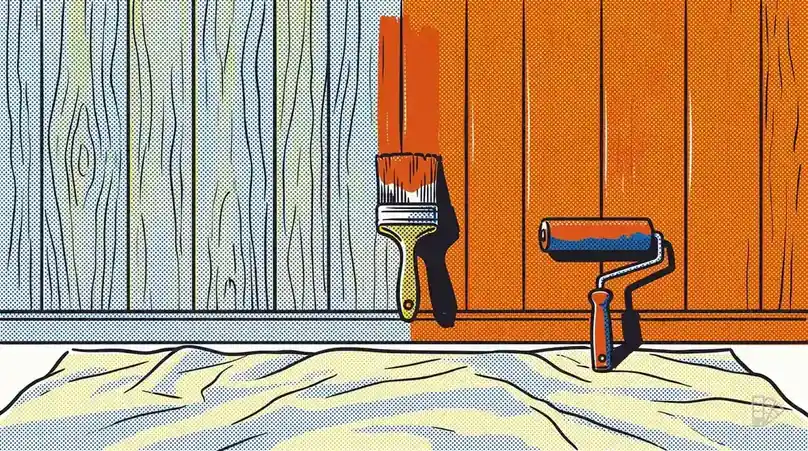
Painting wood paneling is one of the fastest ways to modernize a dated room. Whether you're covering dark 70s grooved paneling or refreshing beadboard in a bathroom, the process is straightforward when you get the prep right. Budget $75-200 in materials per room—a fraction of the cost to tear out and replace walls.
Fill Grooves vs Keep the Texture
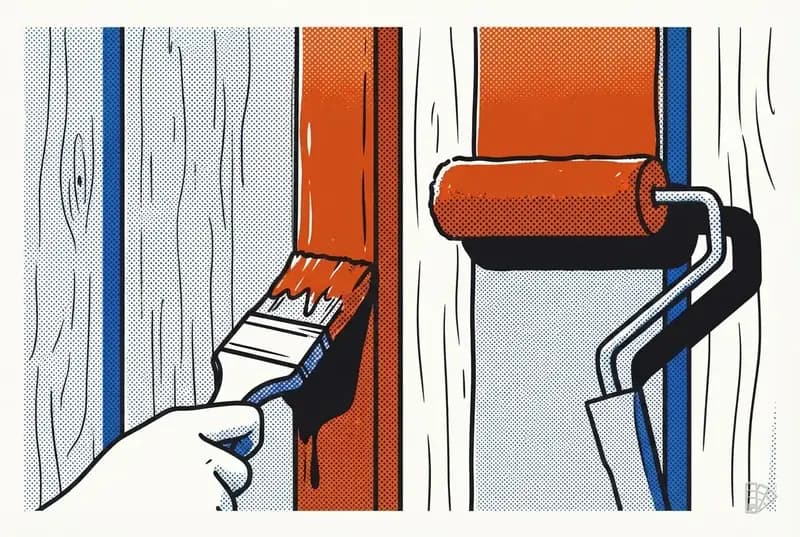
This is the biggest decision in any paneling paint job. Filling grooves gives you a smooth, drywall-like finish. Keeping them preserves character. Neither is wrong — it depends on the paneling type and the look you want.
FILL THE GROOVES
- You want a completely smooth, modern wall look
- The grooves are shallow (under 1/8 in) — filler hides them cleanly
- You’re painting a light, solid color where grooves create shadow lines
- The paneling is cheap sheet stock, not real wood
Use: Lightweight spackle or drywall mud
Apply with a 6-in putty knife. Sand smooth after 24 hrs. Multiple thin coats beat one thick coat.
KEEP THE TEXTURE
- You want the character and texture of real wood paneling
- The paneling is beadboard or shiplap (grooves ARE the design)
- Deep grooves (over 1/4 in) would need excessive filler that cracks
- You’re painting a dark color where grooves add depth
Use: Caulk to seal gaps, leave grooves
Paint will settle into grooves naturally. Use a brush first in the grooves, then roller for flat areas.
Step 1: Clean the Paneling
Decades of dust, nicotine, and cooking residue hide in paneling grooves. Mix TSP (trisodium phosphate) with warm water per label directions and scrub every surface with a sponge. Pay extra attention to the grooves — a stiff-bristle brush works better than a flat sponge in channels.
Rinse with clean water and let dry completely (4+ hours). If the paneling was in a smoking household, add a second pass with denatured alcohol to cut through nicotine film. Skipping this step is the #1 reason paint peels within months.
Step 2: Sand the Surface
Sand with 150-grit sandpaper to scuff the existing finish. You're not stripping — just creating tooth for primer to grip. For sheet paneling, a sanding block covers flat areas fast. For beadboard and wainscoting profiles, use a sanding sponge that conforms to curves.
Wipe the entire surface with a tack cloth after sanding. Do not use a damp rag — moisture can raise the grain on thin veneer paneling and create a rough texture under your primer.
PRO TIP
If you chose to fill grooves (see the decision guide above), sand after the filler has fully cured (24 hours). Use 220-grit on filler areas for a glass-smooth finish. Feather the edges where filler meets wood so there's no visible ridge.
Primer Selection Guide
Primer choice makes or breaks paneling paint jobs. The wrong primer lets tannins bleed through within weeks. Use our cost calculator to estimate your primer and paint budget.
Shellac-Based
Zinsser BIN
Best for
Dark stained paneling, smoke/odor stains, knot bleed-through
Dry time
45 min
Coverage
1 coat covers almost anything
Cost
$25-35 / qt
Best for 70s dark paneling
Water-Based Bonding
Zinsser 123, KILZ 2
Best for
Raw wood, lightly stained, previously painted paneling
Dry time
1 hr
Coverage
1-2 coats depending on stain darkness
Cost
$15-22 / qt
Best for beadboard & shiplap
Oil-Based
KILZ Original, Cover Stain
Best for
Severe stains, water damage, tannin-heavy woods (cedar, redwood)
Dry time
1-2 hrs
Coverage
1 coat, excellent stain blocking
Cost
$20-28 / qt
Best for cedar or redwood paneling
Step 3: Prime Everything
Primer is non-negotiable on paneling. Without it, tannins from the wood bleed through light colors within weeks, creating yellow-brown stains that no amount of topcoat fixes. Use the primer type from the guide above that matches your paneling.
Brush grooves first, then roll the flat areas. Use a 3/8-inch nap roller for smooth paneling, 1/2-inch for textured. Apply one even coat. After it dries, lightly sand with 220-grit to knock down any texture before your topcoat.
PRO TIP
Tint your primer close to your final paint color. This reduces the number of topcoats needed from 2 to sometimes just 1 — saving hours on a paneled room. Ask at the paint counter; most stores tint primer for free.
Step 4: Apply Paint (2 Coats)
Use a high-quality interior latex paint — acrylic latex gives the best durability and self-leveling on paneling. Start by cutting in all grooves and edges with a 2-inch angled brush, then roll the flat surfaces with a 3/8-inch microfiber roller.
Let the first coat dry fully (check the can — typically 2-4 hours). Then apply a second coat the same way. Two thin coats always look better than one thick coat, especially on paneling where paint can pool in grooves and create drip lines.
SHEEN SELECTION FOR PANELING
Eggshell
Best for: Living rooms, bedrooms, hallways
Hides imperfections, subtle warmth
Satin
Best for: Kitchens, bathrooms, high-traffic areas
Easy to clean, light sheen highlights texture
Semi-Gloss
Best for: Wainscoting, trim-adjacent paneling
Durable, matches trim sheen for cohesion
See our full paint sheen guide and eggshell vs satin comparison for details.
Step 5: Touch Up & Cure
After the second coat dries, inspect under raking light (shine a flashlight across the wall at a low angle). This reveals missed spots, thin areas, and drips that look invisible head-on. Touch up with a small brush.
Cure Time Matters
Paint is dry to touch in 2-4 hours, but takes 2-4 weeks to fully cure. During that time, avoid hanging pictures, leaning furniture against the walls, or scrubbing. Latex paint continues to harden and develop its final durability over this curing period.
Best Colors for Paneling
Paneling texture affects how colors look on the wall. Grooves create subtle shadow lines that darken the overall appearance by 5-10% compared to a flat swatch sample. Always test with a large sample (at least 2x2 feet) before committing.
WHITES & OFF-WHITES
The most popular choice. Brightens dark paneling dramatically.
Simply White
Benjamin Moore
Alabaster
Sherwin-Williams
Swiss Coffee
Behr
Pure white can look stark against paneling grooves. Off-whites soften the shadow lines.
WARM NEUTRALS
Greige and warm gray hide groove shadows while feeling modern.
Revere Pewter
Benjamin Moore
Agreeable Gray
Sherwin-Williams
Edgecomb Gray
Benjamin Moore
Warm neutrals work especially well on beadboard where you want subtle texture.
BOLD & DARK
Dark colors lean into the paneling texture instead of fighting it.
Hale Navy
Benjamin Moore
Tricorn Black
Sherwin-Williams
Dark Harbor
Benjamin Moore
Dark colors on paneling create a moody, high-end library look. Use satin sheen to catch light.
For full color comparisons, see our best neutral paint colors guide and best paint for interior walls for product recommendations.
Painting Over Textured Walls
While paneling has grooves, textured walls have bumps and ridges that create their own painting challenges. The key difference: you can't sand texture smooth without a major skim-coating project. Your goal is to work with the texture, not fight it.
Test for asbestos in pre-1980 textured ceilings
Popcorn ceilings installed before 1980 may contain asbestos. Get a test kit ($25-40) before sanding or scraping. See our popcorn ceiling removal cost guide for details.
| TEXTURE | ROLLER NAP | COATS | KEY TECHNIQUE |
|---|---|---|---|
Knockdown Flattened splatter pattern, most common texture | 3/4" nap | 2 | Use a heavy-nap roller and back-roll to fill the valleys |
Orange Peel Fine bumpy texture resembling citrus skin | 1/2" nap | 2 | Medium nap roller works — texture is shallow enough |
Skip Trowel Hand-applied plaster with smooth + rough areas | 3/4" nap | 2-3 | Brush the rough patches first, then roll for even coverage |
Popcorn (ceilings) Heavy spray-on texture, often on ceilings | 1" nap or sprayer | 1-2 | Never roll aggressively — popcorn pulls off. Light passes only |
For all wall textures, use a high-quality 100% acrylic latex paint with good leveling properties. Budget paints leave obvious roller marks on textured surfaces. Check our room painting guide for roller technique fundamentals.
QUICK REFERENCE
- Best primer (dark paneling)
- Shellac-based (Zinsser BIN)
- Best primer (raw/light)
- Water-based bonding primer
- Best paint type
- Interior acrylic latex
- Recommended sheen
- Eggshell or satin
- Sanding grit (prep)
- 150-grit
- Sanding grit (between coats)
- 220-grit
- Coats needed
- 1 primer + 2 paint
- Dry time between coats
- 2-4 hours (check can)
- Full cure time
- 2-4 weeks
- DIY cost per room
- $75-200
- Pro cost per room
- $400-900
- Total project time
- 1-2 days per room
RELATED TOOLS & GUIDES
How to Paint a Room
Complete step-by-step guide to painting any interior room.
FREE TOOLPaint Calculator
Calculate exactly how much paint you need for paneled walls.
COMPARISONSatin vs Semi-Gloss
Which sheen is right for your paneling project?
GUIDEHow to Paint Over Wallpaper
Another tricky surface — here's how to do it right.
GUIDEHow to Fix Peeling Paint
What to do if your paneling paint starts to fail.