HOW TO PAINT TRIM & BASEBOARDS
March 9, 2026 · 14 min read
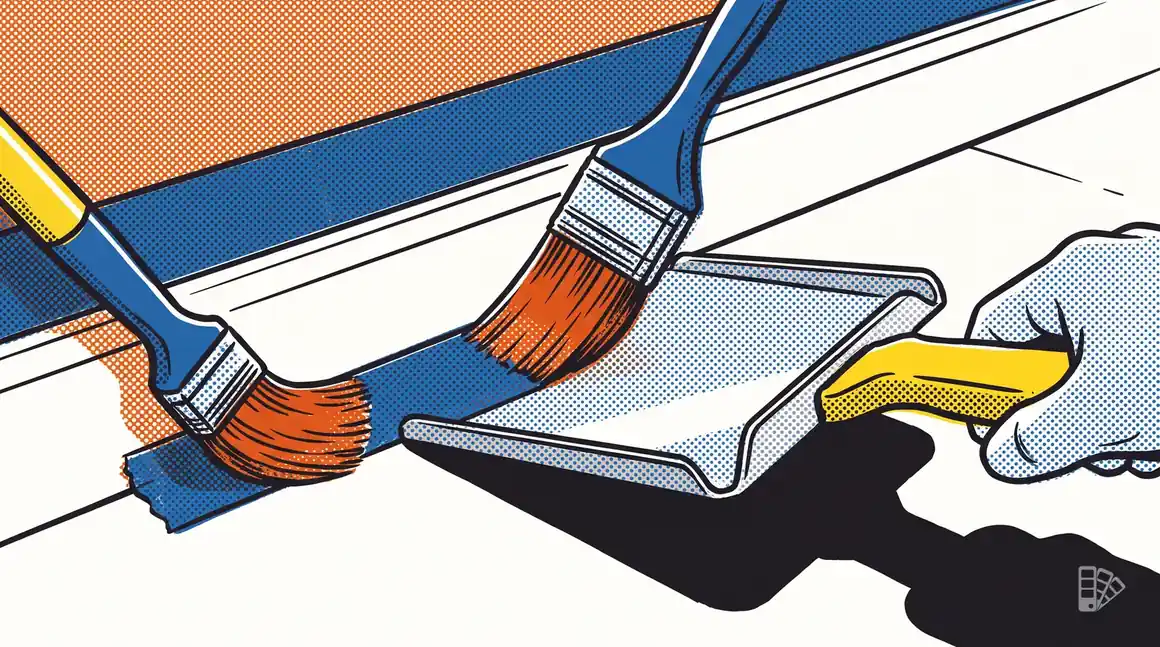
Average room trim
Baseboards + window + door frame
Covers 75-100 lin. ft
Per coat, standard trim
DIY cost per room
Paint + brush + tape
Fresh trim paint transforms a room the way a picture frame transforms a photo — it sharpens every edge and makes the walls look cleaner without repainting them. The difference between amateur and professional trim work comes down to prep, brush choice, and patience between coats. This guide covers painting baseboards, window trim, and door frames using the same techniques pro painters use on $3,000+ room projects.
TRIM PAINTING SUPPLIES
2" angled sash brush
MUST HAVEPrimary brush for all trim work
Semi-gloss or gloss paint
MUST HAVE1 qt per room of trim
Painter's tape (1")
MUST HAVEFrogTape or ScotchBlue Edge-Lock
Canvas drop cloth
MUST HAVEProtects flooring along baseboards
220-grit sandpaper
PREPDe-gloss old paint, smooth patches
Paintable caulk
PREPFill gaps between trim and wall
Wood filler + putty knife
PREPFill nail holes, dents, gouges
Tack cloth
PREPWipe sanding dust before priming
Prep the Trim
30-60 min
Prep is 70% of a professional-looking trim paint job. Skip it and you'll see every bump, crack, and brush stroke through the finish coat. Pros spend more time prepping trim than actually painting it.
Sand the existing finish
Use 220-grit sandpaper to lightly scuff all surfaces. You're not stripping paint — you're creating microscopic scratches (called “tooth”) for the new coat to grip. Sand in the direction of the wood grain on flat trim. For profiled molding, wrap sandpaper around a foam block or use a sanding sponge to follow the contours.
Fill & caulk
- Nail holes and dents: Press wood filler into each hole with a putty knife. Overfill slightly — filler shrinks as it dries. Sand smooth after 30 minutes.
- Gaps between trim and wall: Run a bead of paintable caulk along the seam, then smooth with a wet finger. This eliminates shadow lines that make trim look cheap. Let caulk cure 2 hours before painting.
- Peeling or flaking areas: Scrape loose paint with a 5-in-1 tool, feather the edges with sandpaper. If bare wood is exposed, spot-prime those areas. See our peeling paint repair guide for stubborn cases.
Clean & tape
Wipe all trim with a tack cloth to remove sanding dust. Then apply painter's tape along the wall edge above baseboards, around window glass, and along walls adjacent to door frames. Press tape edges firmly with a putty knife — loose tape lets paint seep underneath, creating ragged lines.
PRO TIP
Tape the floor along baseboards too. Slide a piece of wide painter's tape under the baseboard edge where it meets the floor — this catches drips and keeps your brush from picking up dust off the hardwood.
Prime (When Needed)
20-40 min + dry
You don't always need primer on trim. If the existing paint is in good shape and you're staying in the same color family, sanding alone gives enough adhesion. But certain situations absolutely require it.
| SCENARIO | PRIMER | WHY |
|---|---|---|
| Bare or raw wood | Oil-based or shellac primer | Seals tannins that bleed through latex paint (common on oak, pine, cedar) |
| Previously painted, good condition | None needed | Sanded surface provides enough tooth. Just clean and paint |
| Stained or varnished trim | Shellac-based (BIN) | Only primer that reliably blocks stain bleed-through on first coat |
| MDF or composite trim | PVA or latex primer | Seals the porous cut edges that absorb paint unevenly |
| Covering dark color with light | Tinted primer (gray) | Gray primer blocks dark pigment better than white. Saves a finish coat |
Apply primer with the same cutting-in technique you'd use for finish paint. One coat is enough. Let it dry completely (check the can — usually 1-2 hours for latex, 4+ for oil-based), then lightly sand with 220-grit to knock down any brush texture before your first color coat.
Choose the Right Brush
One-time decision
Trim painting is 100% brushwork — no rollers. An angled sash brush is non-negotiable. The angled tip lets you cut clean lines against walls, floors, and glass. Flat brushes can't reach into corners or follow profiles.
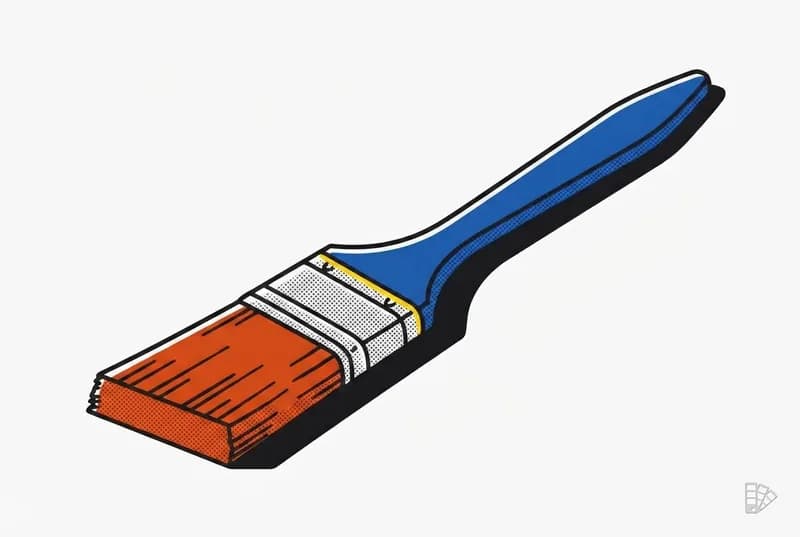
- Handle — the part you hold; a short sash handle gives more control on trim than a long one.
- Ferrule — the metal band clamping the bristles. Brush width is measured across the ferrule: 1" to 2.5" for trim.
- Bristles — nylon/polyester for latex, natural China bristle for oil. The tip is cut at an angle so it can cut a clean line into a corner.
Size guide by trim type
1"
Narrow window muntins, tight corners
For divided-light windows with thin mullions between panes
1.5"
Window sash, small casing profiles
Ideal for painting window frames without hitting glass
2"
Baseboards, door casings, flat trim
The workhorse. Covers most trim in a single pass
2.5"
Wide baseboards (5"+), crown molding
Holds more paint, fewer reloads on long runs
BRUSH MATERIAL
Latex paint? Use nylon/polyester blend bristles. Natural bristles absorb water from latex and go limp. Oil-based paint? Natural China bristle lays down the smoothest finish. A quality 2" angled sash brush costs $12-18 and lasts years if cleaned properly.
Paint Baseboards
20-30 min per wall
Baseboards are the most scuffed, dirtiest trim in any room. They take shoe kicks, vacuum bumps, and pet scratches daily. A semi-gloss or gloss finish is essential here — semi-gloss vs. gloss both work, but semi-gloss hides imperfections slightly better.
BASEBOARD PAINTING ORDER
The three-pass method
- Top edge first. Use the angled tip of your brush to cut a clean line where the baseboard meets the wall. Keep the long bristle edge against the wall. Work in 3-4 foot sections.
- Face of the baseboard. Load the brush and apply in long, horizontal strokes from one end to the other. Maintain a wet edge — don't stop mid-board and come back later.
- Bottom edge. Angle the brush down where the baseboard meets the floor. If there's shoe molding, paint it at the same time.
WATCH OUT
Baseboards collect dust constantly. Even after prep, run a tack cloth over each section immediately before painting. Dust particles trapped in wet paint create a gritty, sandpaper-like finish that's visible in semi-gloss and gloss sheens.
Paint Window Trim
20-45 min per window
Window trim has the most exposed edges of any trim type. It frames natural light, so every imperfection shows. The key challenge is keeping paint off the glass while getting full coverage into the corner where the casing meets the window frame.
WINDOW PAINTING ORDER
Order of operations
- Sash and muntins first (if operable windows). Use a 1" or 1.5" angled brush. Let a tiny bead of paint overlap onto the glass — about 1/16" — this creates a seal that prevents moisture from rotting the wood.
- Jamb (inner frame). Paint the flat surfaces inside the window opening. Use a 2" brush with light, even strokes to avoid drips on vertical surfaces.
- Casing (outer frame). Paint the wide trim surrounding the window. Work top to bottom: header, then sides, then the sill and apron. The sill is horizontal and prone to drips, so apply thin coats.
After the paint dries, score the paint-to-glass edge with a razor blade at 45 degrees. This creates a crisp line and removes any accidental drips on the glass. A single-edge razor blade holder costs $3 and makes this effortless.
“Let paint overlap onto glass by 1/16 inch. The seal prevents moisture rot at the joint — the razor cleans it up after.”
Paint Door Frames
15-25 min per frame
Door frames are simpler than window trim but have one tricky detail: the hinge side is partially hidden when the door is open. Plan to paint with the door open at about 45 degrees so you can reach both sides of the jamb. If you're also painting the door itself, do the frame first and let it dry before removing the door or taping the hinges.
Parts of a door frame
CASING
The decorative trim around the opening. Paint with a 2" brush, top header first, then both sides.
JAMB
The inner sides of the door opening. Use thin coats — thick paint on jambs can prevent the door from closing.
HEADER
The top piece inside the opening. Paint this before the sides so any drips get picked up by the next pass.
Hardware tips
- Hinges: Remove the hinge pins and slide out the door, or tape hinges carefully. Never paint over hinges — paint in the pin channel causes sticking and squeaking.
- Strike plate: Remove it (two screws) or tape it. Painted strike plates prevent the latch from engaging.
- Door stop: The thin strip that the door rests against when closed. Paint it, but use very thin coats to avoid buildup that prevents the door from closing flush.
COMMON MISTAKE
Thick paint on door jambs is the #1 reason freshly painted doors stick. Each coat adds roughly 2-4 mils of thickness. Two heavy coats on both jamb faces can reduce the door clearance by 16 mils (nearly 1/64") — enough to cause binding. Use thin, even coats and sand lightly between them.
Second Coat & Clean Lines
Same as first coat + dry time
Two coats is the minimum for trim. Semi-gloss and gloss paints are semi-transparent on the first coat — you'll see brush strokes, thin spots, and the old color showing through. The second coat builds opacity, evens out the sheen, and creates the durable film that makes trim paint washable.
Between coats
DRY TIME
2-4 hours
Latex trim paint. Touch-test: no tack, no fingerprint.
LIGHT SAND
220-grit
Knock down brush marks and dust nibs. Tack cloth after.
Removing tape for clean lines
Pull tape while the final coat is still slightly tacky — about 30-60 minutes after application. Pull at a 45-degree angle, slowly and steadily away from the painted edge. If the paint has fully dried and bonded to the tape, score the tape line with a utility knife before pulling to prevent tearing.
FULL CURE TIME
Paint is dry to touch in hours but won't reach full hardness for a month. Avoid leaning objects against painted baseboards, slamming doors against fresh frames, or scrubbing trim with cleaners during this period. For high-traffic areas, consider an alkyd-modified latex that cures harder and faster.
Which Sheen for Trim?
Trim paint should always be shinier than wall paint. The contrast creates visual depth — flat or eggshell walls with semi-gloss trim is the classic combination. Higher sheen also means better washability, which matters for surfaces that get touched, scuffed, and cleaned regularly.
| SHEEN | DURABILITY | HIDES FLAWS | BEST FOR |
|---|---|---|---|
| Satin | Good | Best | Crown molding, decorative trim in low-traffic areas |
| Semi-GlossRECOMMENDED | Very good | Moderate | Baseboards, door frames, window trim — most popular choice |
| High-Gloss | Excellent | Worst | High-end millwork, historic homes, furniture-grade trim |
For a deeper dive, see our satin vs. semi-gloss comparison and semi-gloss vs. gloss breakdown.
Quick Reference Cheat Sheet
TRIM PAINTING CHEAT SHEET
PAINT ORDER (TOP TO BOTTOM)
KEY NUMBERS
BRUSH QUICK PICK
Baseboards & door casings
2" angled sash brush
Window sash & muntins
1" – 1.5" angled sash brush
Need exact material quantities? Use our paint calculator or check the cost calculator for full project pricing.
RELATED TOOLS & GUIDES
Best Paint for Trim
Enamel trim paints ranked by hardness, leveling, and sheen.
COMPARISONOil-Based vs Latex Paint
Alkyd, acrylic, and hybrid enamels — plus painting over oil.
GUIDEHow to Paint a Room
Full room painting guide from prep to cleanup
GUIDEHow to Paint a Door
Panel-by-panel technique for smooth, drip-free doors
COMPARISONSatin vs Semi-Gloss
Side-by-side sheen comparison for trim and walls
FREE TOOLPaint Calculator
Calculate exactly how much paint you need
GUIDEHow to Fix Peeling Paint
Repair guide for flaking, bubbling, and peeling trim