FLAT VS SATIN
The two ends of the everyday paint range. Flat swallows light and hides every flaw; satin bounces it back and takes a scrubbing. Here is exactly which one belongs on your walls, your ceilings, and your siding.
Quick Verdict
Flat and satin are the two ends of the everyday paint range, so the choice is rarely about taste — it is about the surface. Use flat when the substrate is imperfect and nobody touches it: ceilings, quiet bedrooms, stucco, brick, soffits. Use satin when the surface gets wet, dirty, or handled: kitchens, baths, hallways, wood siding, trim. If your wall is somewhere in between, the answer is usually eggshell, not a compromise between these two.
FLAT
Best for: Ceilings, bedrooms, formal rooms, stucco and brick exteriors
- Hides drywall seams, patches, nail pops and stucco cracks better than any other sheen
- Zero glare — the only safe choice under raking window light or can lights
- Touch-ups blend invisibly, so a leftover quart keeps a wall looking new for years
- Deep and saturated colors read richer with no hot spots
- Burnishes — rubbing a mark actually polishes a shiny spot into the film
- Absorbs stains and holds dirt; outdoors it needs washing every 18–24 months
- Chalks faster on sun-facing exterior walls, shortening the repaint cycle
SATIN
Best for: Kitchens, baths, hallways, kids' rooms, wood and fiber-cement siding
- Scrubbable — most brands rate satin for 1,000+ scrub cycles versus a few hundred for flat
- Sheds water, dirt and mildew, which is why it is the default siding finish in most of the US
- Holds color depth two to three years longer on south and west exposures
- Repaint cycle runs roughly 7–10 years outside versus 5–7 for flat
- Reflects light into every wave, dent and roller lap on an imperfect wall
- Touch-ups flash — the patch dries at a different sheen than the aged wall
- Runs a few dollars more per gallon and shows lap marks if you stop mid-wall
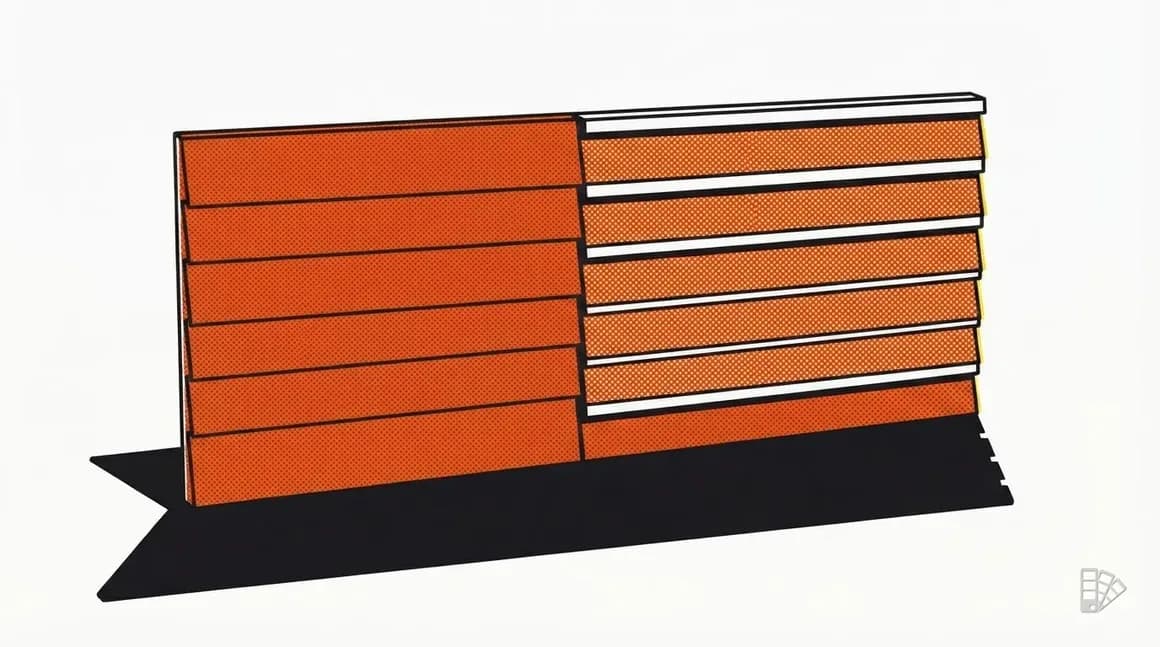
Where Flat and Satin Sit on the Sheen Scale
Flat reflects almost no light — 0–5% on a 60° gloss meter. Satin reflects 26–40%, roughly six to eight times as much. That gap is what drives every other difference on this page: hiding power, washability, glare, and how a touch-up dries. Everything between them — eggshell and satin included — is a trade along that same line.
THE SHEEN SCALE — FLAT SITS AT THE FLOOR, SATIN AT THE MIDPOINT
Light reflectance measured on a 60° gloss meter. Ranges vary a few points by manufacturer — Sherwin-Williams satin reads higher than Benjamin Moore satin, and one brand's “low lustre” is another's satin.
FLAT: 0–5% REFLECTANCE
Absorbs nearly all light. The surface feels chalky, hides everything, and cannot be scrubbed without polishing a shiny halo into the film.
SATIN: 26–40% REFLECTANCE
A soft pearl glow you can see from across the room. The tighter film sheds water and dirt, which is what makes it cleanable inside and weatherable outside.
Eggshell sits between them at 10–25%, which is why so many searches turn into “flat vs eggshell vs satin” — see the three-way table further down.
Feature-by-Feature Comparison
Eleven metrics that actually change the outcome of a job. Note the two rows people skip and regret: application forgiveness and touch-ups. Satin punishes a stop in the middle of a wall, and it never blends on a repair.
| FEATURE | FLAT | SATIN |
|---|---|---|
| Sheen Level | 0–5% reflectance — no visible shine at any angle | 26–40% reflectance — soft pearl glow, visible across the room |
| Hiding Imperfections | Excellent — the reason drywall crews and stucco painters ask for it | Fair — light rakes across waves, dents, and patch edges |
| Washability | Poor — scrubbing burnishes a glossy spot; expect to repaint the wall | Very good — most satins are rated 1,000+ scrub cycles |
| Durability / Traffic | Low — shoulder rubs, chair backs, and pet contact all leave marks | High — the standard for hallways, kitchens, and rentals that turn often |
| Touch-Ups | Blends invisibly with same-batch paint and the same roller nap | Flashes — a repair usually means painting corner to corner |
| Glare | None — safe under can lights, skylights, and low winter sun | Noticeable — never put it on a ceiling or a wall lit from a hard angle |
| Exterior Performance | Holds dirt and mildew; chalks faster on sun-facing walls | Sheds water and dirt; keeps color depth 2–3 years longer in full sun |
| Repaint Cycle (exterior) | Roughly 5–7 years on siding in most climates | Roughly 7–10 years on the same substrate |
| Application Forgiveness | Very forgiving — hides lap marks, roller stipple, and brush drag | Unforgiving — keep a wet edge or the laps will show forever |
| Cost per Gallon | Cheapest sheen in any line — typically $5–$10 under satin (2026 ranges) | A few dollars more per gallon; premium exterior satins run highest |
| Best Surfaces | Ceilings, low-traffic walls, stucco, brick, soffits, older wavy plaster | Kitchens, baths, hallways, trim-adjacent walls, wood and fiber-cement siding |
Interior: Which Rooms Get Which Sheen
Most houses use both. The split usually falls along the wet-and-busy line: flat overhead and in the quiet rooms, satin everywhere there is steam, grease, or hands. Ceilings are the one call that is basically automatic — see how to paint a ceiling for why sheen up there is a trap.
Never satin. A ceiling is lit from below and from the side, so any sheen turns every taped joint and roller lap into a shadow line.
Low traffic and lots of morning window light. Flat keeps the color even across the wall instead of blooming a bright patch near the glass.
Flat if the walls are old plaster or the room is a showpiece; satin if kids, dogs, and a sectional are pushed against the drywall daily.
Chair rails take the abuse, not the walls. Flat gives the gallery backdrop that deep dining-room colors are chosen for.
Grease aerosolizes and lands on every wall in the room. Satin takes a degreaser and a sponge; flat absorbs the film and stains.
The tighter satin film resists the moisture that feeds mildew behind the paint. Pair it with a mildewcide-added bath formula.
The highest-contact drywall in the house. Satin survives shoulder rubs and vacuum strikes; flat needs a repaint every few years.
Marker, handprints, and tape residue all come off satin with a damp sponge. On flat, cleaning a crayon mark leaves a shiny scar.
Humidity, lint, and wet coats scraping the wall. This is the room where satin earns its price difference fastest.
Any sheen bounces screen light back at the viewer. Flat in a deep neutral is the standard spec for a projector room.
Exterior: Flat or Satin by Siding Type
Outside, the debate is real and the substrate decides it. Textured surfaces read blotchy under sheen; smooth ones do not, and satin buys durability that flat cannot match in the weather. Stucco is the classic flat case — the prep is covered in how to paint stucco — while lap siding and fiber cement are written satin on most repaint bids.
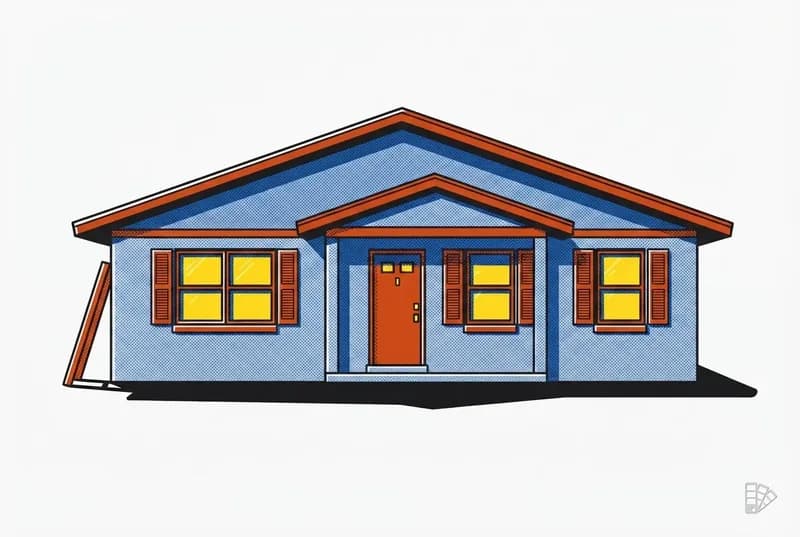
SHEEN MAP OF A TYPICAL ELEVATION
Most houses are not one sheen. Body and soffits go flat or low-lustre; anything that gets touched, splashed, or wants to pop goes satin.
Stucco
FLATTexture catches light from every angle, so sheen reads blotchy and every hairline crack lights up. Flat (or a low-lustre acrylic elastomeric) is the standard spec — plan on a wash every 18–24 months in humid climates.
Brick & Masonry
FLATMortar joints and face variation are the whole point of the wall. Flat masonry paint keeps the surface reading as brick instead of plastic, and it breathes better over a damp substrate.
Wood Lap Siding
SATINMilled wood is smooth enough that sheen does not hurt, and satin's tighter film sheds the water that opens up grain checking. Most repaint bids on cedar or redwood siding are written satin.
Fiber Cement (HardiePlank-style)
SATINFactory-finished board is already low-lustre, so a satin topcoat matches. It also holds color through 10 years of UV better than flat on south and west walls.
Vinyl Siding
SATINUse a vinyl-safe acrylic in a color no darker than the original — satin keeps chalk and pollen from embedding in the panel face and hoses off cleanly.
Soffits & Eaves
FLATShaded, never touched, and viewed from below at a hard angle. Flat hides the seams between plywood or vented panels; satin up there is a glare band all afternoon.
Trim, Fascia & Corner Boards
SATINSheds rain off the horizontal top edges and gives the elevation the contrast line that sells the paint job. Step up to semi-gloss only if the trim is dead-flat and well-prepped.
Front Door & Shutters
SATINHandled daily and expected to look sharp. Satin is the low end here — many painters go semi-gloss on the door and satin on the shutters.
Chalky or Failing Old Paint
FLATIf the existing coating is chalking, prime with a bonding masonry primer first. Flat over a marginal substrate hides the remaining unevenness; satin advertises it.
Painting Satin Over Flat (and Flat Over Satin)
Both directions work. Both fail for predictable reasons: going up in sheen exposes every flaw the flat was hiding, and going down in sheen fails on adhesion unless you kill the gloss first. Here is the prep that makes each one hold.
SATIN OVER FLAT
Easy — but budget for an extra coat.
- 01Wash the wall. Flat is porous and holds cooking film, dust, and hand oils that will telegraph through a tighter satin film.
- 02Fill and sand every ding now. Flat was hiding them; satin will not.
- 03Spot-prime any repairs, water stains, or burnished spots so the sheen dries uniform.
- 04If the old flat is chalky or a builder-grade contractor flat, roll a coat of primer over the whole wall — otherwise the satin soaks in unevenly and dries patchy.
- 05Two finish coats, cut and roll one wall at a time, keeping a wet edge from corner to corner.
FLAT OVER SATIN
Doable — adhesion is the whole job.
- 01Clean with a degreaser, then dull the sheen: scuff-sand with 180–220 grit or wipe on a liquid deglosser.
- 02Vacuum and tack the dust off. Sanding residue under flat paint shows as a gritty texture.
- 03Roll a bonding primer. Skipping this is why flat over satin peels in sheets when someone later pulls tape off the wall.
- 04Two coats of flat. It covers well, but hiding a darker satin color still takes the second coat.
- 05Keep a labeled quart from the same batch — flat touch-ups blend perfectly, which is half the reason you switched down.
WATCH OUT
You cannot fix a sheen mismatch with a partial coat. Sheen is set by the last full film that dried, so a satin patch inside a flat wall stays visible no matter how well the color matches. Paint corner to corner, ceiling line to baseline — the same rule that makes peeling-paint repairs look seamless.
Flat vs Eggshell vs Satin: Quick Pick
Most people searching flat versus satin are really choosing between three finishes, because eggshell sits right in the gap. If you need more sheen than satin for trim or cabinets, keep going to satin vs semi-gloss.
| QUESTION | FLAT | EGGSHELL | SATIN |
|---|---|---|---|
| Reflectance | 0–5% | 10–25% | 26–40% |
| Hides flaws | Best in class | Good | Weakest of the three |
| Cleaning | Dust only | Damp cloth | Sponge and mild cleaner |
| Touch-ups | Invisible | Usually invisible | Expect flashing |
| Go-to rooms | Ceilings, bedrooms, dining | Living rooms, offices, halls | Kitchens, baths, kids' rooms |
| Exterior use | Stucco, brick, soffits | Rare outside — skip it | Wood, fiber cement, vinyl |
| Relative price | Lowest | Middle | Highest of the three |
| Pick it when | The wall is imperfect and nobody touches it | You want one finish for the whole house | The surface gets wet, dirty, or handled |
The Bottom Line
THE RULE
Flat where the surface is imperfect.
Satin where it gets wet, dirty, or handled.
Inside, that means flat on ceilings and quiet rooms, satin in kitchens, baths, halls, and kids' rooms. Outside, it means flat on stucco, brick, and soffits, satin on wood and fiber-cement siding, trim, and doors. When a surface falls in the middle — a busy living room, a smooth-troweled stucco wall — eggshell is the compromise, which is why it ends up on more walls than either extreme.
0–5%
flat reflectance — the only sheen that truly hides drywall and stucco flaws
7–10 yr
typical satin exterior repaint cycle, versus 5–7 for flat
$5–$10
typical 2026 per-gallon premium for satin over flat in the same line
On a 2,400 sq ft two-story, the satin upgrade on the body is usually under $150 in material — noise next to the labor line on a full exterior repaint, and it buys years of extra cycle. Price the whole job with the paint calculator, then read the full paint sheen guide if you are still deciding between the finishes in between.
Frequently Asked Questions
RELATED TOOLS & GUIDES
Flat vs Eggshell
The narrower version of this decision, one step up the sheen ladder.
COMPARISONEggshell vs Satin
The middle matchup most interior walls actually come down to.
COMPARISONSatin vs Semi-Gloss
Where to stop when satin is not tough or sharp enough for trim.
GUIDEPaint Sheen Guide
All six finishes, reflectance ranges, and what pros spec on each.
GUIDEHow to Paint Stucco
Prep, primer, and coverage rates for the surface that demands flat.